INSIGHTS From the Professionals
 Ryan Williamson
F37 Foundry
Ryan Williamson
F37 Foundry
When you're reviewing work, what makes a piece truly stand out?
Clear idea front and centre, especially with type entries. Type is meant to be read, so let me read it.
What part of submitting an entry do you think most people overlook?
Not complicating the entry with how you present it.
What is one thing you are tired of seeing?
Convoluted entries. A typeface entry does not need a video, website and a dozen slides. It's not a portfolio of all the applicant's skills and work; it is meant to be a targeted single idea delivered with impact and understood immediately.
 Vito Luigi Giannoccaro
Creative Manager · Sky Italy
Vito Luigi Giannoccaro
Creative Manager · Sky Italy
When you're reviewing work, what makes a piece truly stand out?
The social and cultural impact.
What part of submitting an entry do you think most people overlook?
An outstanding presentation.
What's something you wish you could tell young creatives entering the field?
Be brave, and proud. Creativity is problem solving, and we need it to live better.
 Raul Palhares
Creative Manager · Etihad Airways
Raul Palhares
Creative Manager · Etihad Airways
What part of submitting an entry do you think most people overlook?
Responding to the brief.
What is one thing you wish more young creatives were doing?
Thinking before prompting.
What do students and young creatives need to know about winning awards?
Use data to support an idea, not the other way around.
 Chisaokwu Joboson
Type Designer/Founder · Udi Foundry
Chisaokwu Joboson
Type Designer/Founder · Udi Foundry
When you're reviewing work, what makes a piece truly stand out?
Unconventionality and authenticity. Work that feels like it could only have been made by that person, rather than something assembled from what is currently considered “good design.” I’m drawn to work that takes a clear point of view, has something of its own to say, and isn’t afraid to do things differently.
What part of submitting an entry do you think most people overlook?
The story behind the work. A good project can lose some of its impact if the submission doesn’t communicate why the work exists, what informed the decisions, and what makes it meaningful. The jury should be able to read your submission and think, “Yeah, they see it.” Give them enough context to understand the thinking behind the work, not just what you made.
What else do students and young creatives need to know about winning awards?
Apply for awards whenever you can. Not because winning is the ultimate measure of your work, but because entering means you’re willing to put your work forward and say, “I believe this is worth being seen.” A lot of young designers don’t see their own work that way yet. Winning is great, of course, but even the act of entering can be an important step in learning to value your own practice and put it into the world.
 Ally Thomasson
Senior Designer · Sister Mary
Ally Thomasson
Senior Designer · Sister Mary
What part of submitting an entry do you think most people overlook?
The description box. A lot of submissions have a lackluster project overview that really worked against the visuals. When the idea and summary were neglected, there was visually incredible work that was sold short. This worked in both directions: there were projects that didn’t have quite the same level of craft as the top work, but their explanations of the idea were so stellar that they helped support the project as a whole.
What is one thing you wish more young creatives were doing?
Printing out their work and putting it up! I’m all for using Photoshop to polish and refine photos and work, but in this era of AI and digital mockups, there were a few projects that were incredible for their analog labor. Materials, hand-painting, and hand-cutting elements were aspects of craft that really made the work work on screen. I’ve seen a lot of magic done with an iPhone shot of a hand-glued mockup, and I think it teaches young creatives a lot about scale and the importance of testing. This is extremely applicable to package-design projects that are, in theory, going to be physically produced in the real world. It’s always worth testing!
What is one thing you are tired of seeing?
All of the AI voiceover videos with tons of stock imagery and sometimes made-up, irrelevant information. A video can be such a powerful design tool, but so many submissions may waste time with a two- or three-minute video that doesn't add anything to the project.
 Kenie Mei lam Kwok
Creative Strategy Lead · Meta
Kenie Mei lam Kwok
Creative Strategy Lead · Meta
When you're reviewing work, what makes a piece truly stand out?
Originality: although it might be hard to create net-new creative, from ideation to execution, any fresh take on even one small portion of it is important. At a glance, it should feel refreshing, especially compared with what’s been popular and seen in the market.
What is one thing you wish more young creatives were doing?
Thinking outside the box. Rebellion that goes against trends and hype. Advertising is very trend-based: crypto, NFTs, generative AI, agents—all these buzzwords. I want to see work that pushes against that.
What else do students and young creatives need to know about winning awards?
Present it the way you want to be seen.
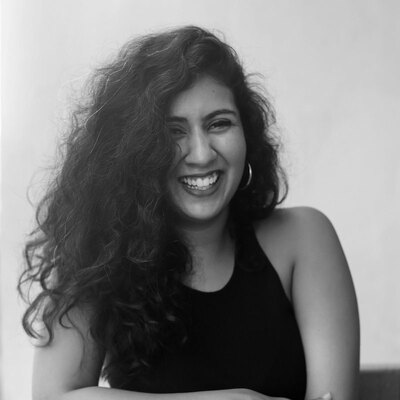 Ishita Jain
Illustrator & Designer
Ishita Jain
Illustrator & Designer
When you're reviewing work, what makes a piece truly stand out?
Thoughtful curation and sequencing of photos and videos that explain the context of the project.
What part of submitting an entry do you think most people overlook?
The descriptions! A short and compelling description defining the intent and inspiration for the project goes a long way.
What is one thing you are tired of seeing?
Over the top mock-ups.
 Bairbre McGlade
Creative Director · TBWA\Ireland
Bairbre McGlade
Creative Director · TBWA\Ireland
When you're reviewing work, what makes a piece truly stand out?
A really clear creative idea grounded in a strong insight.
What part of submitting an entry do you think most people overlook?
A really clear idea over the execution of it.
What is one thing you wish more young creatives were doing?
Grounding their thinking strategically.
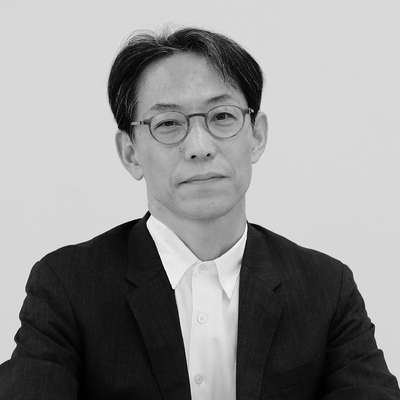 Masahiko Kimura
President · GK Graphics Incorporated
Masahiko Kimura
President · GK Graphics Incorporated
What is one thing you wish more young creatives were doing?
I would like young creatives to spend more time carefully observing the people and society they are designing for, and to frame questions from their own point of view.
Rather than simply combining existing forms of expression, I hope they will engage with real life, culture, and physical experience, and consider what kind of design is truly needed for the subject at hand. In doing so, it is also important to imagine how the people receiving the information, or using the product or service, might feel and what kind of situation they may be in.
It is also important not to rush to complete the first idea that comes to mind, but to explore multiple possibilities through prototyping and testing. The time spent thinking and the traces of that process ultimately give greater depth to the final work.
What is one thing you are tired of seeing?
Work that uses trending visual styles or technologies simply for the sake of using them.
Even when the result looks polished, work that lacks a clear connection between the approach and the subject, or feels too familiar, tends not to leave a strong impression. When addressing social issues, I also think we should be careful not to make complex problems appear resolved through simple mechanisms or beautiful imagery alone, without fully understanding their complexity.
I believe true originality comes not from surface-level style or technology, but from how we look at a subject and how we frame the problem.
What else do students and young creatives need to know about winning awards?
Student work has a kind of freedom that is different from fully developed professional work. That is exactly why I hope students will not be constrained only by feasibility or level of finish, but will take on bold questions and explore new possibilities.
At the same time, freedom of thought is not the same as an ambiguous proposal. Even when a project imagines the future or takes an experimental approach, it can still be highly convincing if there is consistency between the research behind it and the ideas and systems that emerge from that research.
Rather than making winning an award the only goal, I hope you will use this opportunity as a way to practice communicating your ideas clearly to society.
Jayme Blasko Global Creative Excellence Lead · dentsu Awards & Creative Excellence
When you're submitting work, what do you do to make it stand out?
Judges are reviewing an enormous amount of work, so clarity matters. I want someone to understand the problem, the idea and why it mattered very quickly. I also want it to be memorable, whether that’s the simplicity of the idea, the craft, the cultural insight or the impact.
What part of submitting an entry do you think most people overlook?
People can spend so much time explaining how clever the idea was that they underinvest in proving what it actually did. Great work should have an impact, on the business, on people, on culture, ideally some combination of those. And you need to make that impact impossible to miss.
Any thoughts on the art of formulating a case study?
Find the simplest, most compelling story within the work and tell that story. Every detail should earn its place. The best cases tend to feel inevitable: of course that was the problem, of course this was the solution, and look what happened because of it.
When do you know an entry is ready to submit?
When someone who knows nothing about the work can see it once and immediately tell you what the idea was, why it was interesting and why it mattered.
What's something you wish you could tell young creatives entering the field?
Care about execution as much as the initial idea. A great thought is only the beginning; increasingly, craft is what separates good work from exceptional work.
What do students and young creatives need to know about winning awards?
Awards are useful because they give us a benchmark for excellence, but the real ambition is creating something that works for the client and matters to people. Recognition should be the consequence of that.
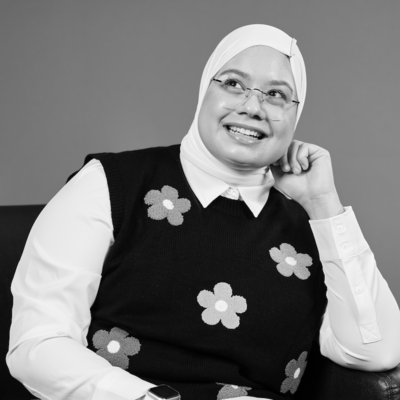 Amera Lulu
Senior Art Director & Adjunct Professor · Edelman
Amera Lulu
Senior Art Director & Adjunct Professor · Edelman
When you're reviewing work, what makes a piece truly stand out?
Great work rarely starts with a technology or an execution format; it starts with a truth. The standout pieces identify a deep, often overlooked nuance of human behavior, culture, or emotion. When an insight makes you say, “I’ve felt that, but I’ve never seen a brand address it like this,” the foundation is rock solid.
What's something you wish you could tell young creatives entering the field?
What I wish I could tell every young creative entering the industry is: Your unique perspective is your only real unfair advantage—don't trade it away to fit in.
When you first start out, it’s easy to feel like you need to copy the visual styles, agency jargon, or polished frameworks of the people who came before you. But standardizing your thinking to match everyone else just makes you blend into the background.
What else do students and young creatives need to know about winning awards?
Winning an award is a validation of your effort, but it is never the definition of your talent.
Awards like the Young Ones are incredible launching pads—they build confidence, get your portfolio noticed, and open doors to agency recruiters. But the most important thing to understand is that judging is subjective, and winning hardware is an outcome, not the ultimate goal.
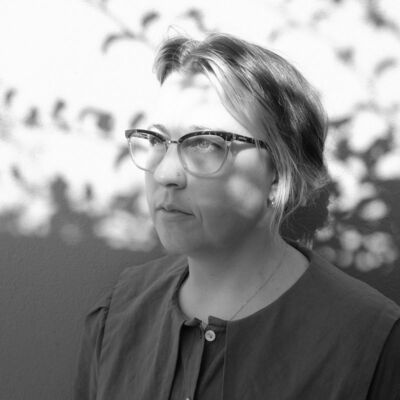 Steph Simpson
Red & Yellow
Steph Simpson
Red & Yellow
When you're reviewing work, what makes a piece truly stand out?
Authentic creative voice and storytelling.
What is one thing you are tired of seeing?
AI voice overs with an American/British accent when this perspective has nothing to do with the project. I would rather hear a VO in the relevant language and read the English subtitles.
What else do students and young creatives need to know about winning awards?
Your work can't just be visually pleasing, it needs to meet a need and serve a purpose. Design moves people.
 Saymon Medeiros
Creative Director · Bigtime Creative Shop
Saymon Medeiros
Creative Director · Bigtime Creative Shop
When you're reviewing work, what makes a piece truly stand out?
When ideas have a clear problem–solution structure, the execution matters less. After all, this is student work, and no one expects flawless execution.
What really matters is how the problem or challenge elevates and justifies the idea and its solution. That's what reveals how they think, how they rationalize, and, most importantly, their own point of view.
What part of submitting an entry do you think most people overlook?
To craft ideas specifically for the category they're being entered into. Try throwing your idea into different categories and ask yourself where it truly belongs. What's the core of the idea?
Submitting the same idea across too many categories often shows a lack of clarity about where it's strongest. A well-defined category forces you to sharpen the idea even further, making both the work and the entry much stronger.
What is one thing you wish more young creatives were doing?
Having more fun.
I'd love to see more humor and less of the default CSR approach to ideas. Advertising should be fun, after all. Purpose-driven work has its place, but it sometimes feels like it's become the only acceptable way to create ideas in our industry.
Let's not forget that we solve real business and brand problems. And one of the best ways to do that is often through humor and entertainment.
The world is already serious enough, we don't need advertising to make it even more boring. I think it's the responsibility of the next generation of creatives to bring the fun back.
Just ask yourself: when you're scrolling, what are you more likely to stop for, something genuinely entertaining, or another serious, purpose-driven message?
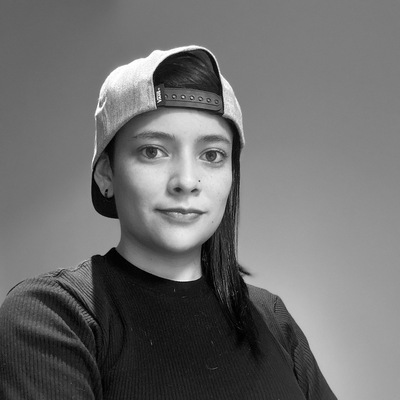 Paula Zambrano
Senior Art Director · Saatchi & Saatchi Dubai
Paula Zambrano
Senior Art Director · Saatchi & Saatchi Dubai
What is one thing you wish more young creatives were doing?
Focus on the simple things, in the behaviors and key insights, and use AI as a tool to complement you, not to rely on 100%. The creative input still needs to be human.
What is one thing you are tired of seeing?
Crazy innovations impossible to do in real life.
What's something you wish you could tell young creatives entering the field?
Don't give up. Find a way to crack your ideas and take them to another level. Don't stay with the first thought—challenge it. How can you make it better?
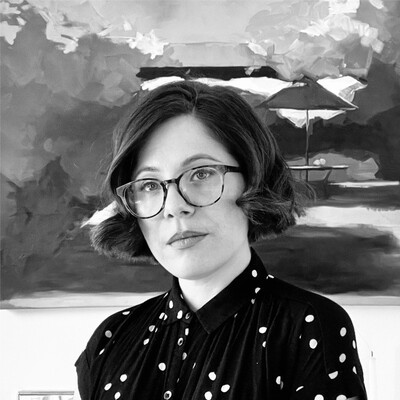 Aisha Hakim
Freelance Creative Director · Aisha Made It
Aisha Hakim
Freelance Creative Director · Aisha Made It
When you're reviewing work, what makes a piece truly stand out?
A point of view I haven't seen a hundred times already. Craft that shows someone cared. A brain that twists a familiar problem or product into something you didn't expect. Polish helps. Personality wins.
What part of submitting an entry do you think most people overlook?
The presentation of the idea, not just the idea itself. Low-res images, sloppy write-ups, work that's hard to parse in the first ten seconds. Judges move fast. If your entry makes them work to understand it, you've already lost your panel.
What is one thing you wish more young creatives were doing?
Show me what YOU want to make, not what you think I want to see. Go big and lofty with the stunts or execution, but make sure they are rooted in practical problem solving.
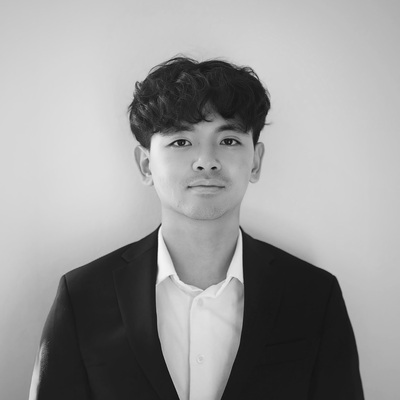 Johnny Jiasheng Chen
Founder/Industrial Designer · Forenext Design/WAC Group
Johnny Jiasheng Chen
Founder/Industrial Designer · Forenext Design/WAC Group
When you're reviewing work, what makes a piece truly stand out?
For competitions, appealing visualizations, strong storytelling, and explanatory videos make a first impression. These visual details help jurors better and faster understand the design background and ideas.
What is one thing you wish more young creatives were doing?
Place your work in multiple scenarios and view it from different perspectives. Question yourself whether the ideology behind it makes sense. Is it a logically sound design?
What is one thing you are tired of seeing?
Culture-heavy designs with poor explanation. Culture is one of the most critical elements in humanity; a well-rounded execution is needed to let it shine.
 Ahmed Shohoud
Senior Art Director · Fp7 McCann
Ahmed Shohoud
Senior Art Director · Fp7 McCann
What is one thing you are tired of seeing?
Work that feels like it was created to impress judges instead of solving a real problem. You can usually tell when an idea exists because someone wanted to make a cool case study rather than make something genuinely useful or meaningful.
What's something you wish you could tell young creatives entering the field?
Stop putting so much pressure on making something “award-worthy.” Focus on making something honest, smart, and memorable. If the idea is genuinely good, awards become a possibility. If awards are the goal from the start, it usually shows.
What else do students and young creatives need to know about winning awards?
Winning isn't just about having the best work. Timing, presentation, and the jury all play a role. Don't measure your talent by one result. Keep making work, keep entering, and keep getting better. The people who stay consistent usually end up creating the work everyone remembers.
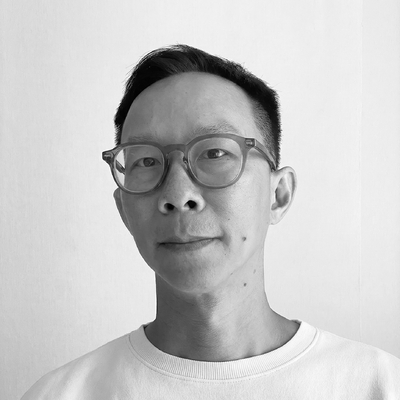 Apiwat Pattalarungkan
Creative Director/Commercial Film Director · TJT Creative Lab
Apiwat Pattalarungkan
Creative Director/Commercial Film Director · TJT Creative Lab
What part of submitting an entry do you think most people overlook?
I think people often overlook that submitting an award entry is a creative task in itself. I've seen great work lose its chance simply because it was entered in the wrong category. Choosing the right category is just as important as the work itself.
I also see people submitting work hoping it might get lucky. In my experience, that rarely happens.
And finally, don't underestimate the presentation. Judges only have a few minutes with each entry. If your case film is too long or doesn't get to the point quickly, even a great idea can be overlooked.
What is one thing you wish more young creatives were doing?
I wish more young creatives would judge their own work more honestly before submitting it. Be your own toughest critic, not your biggest fan. It's easy to be biased toward something you've spent so much time making, but try to look at it as objectively as you can. Don't submit something just because it's an assignment or because everyone else is doing it. Ask yourself, “Would I be excited to see this win?” If the answer is no, keep pushing. Believe in your work before asking others to believe in it.
What else do students and young creatives need to know about winning awards?
Stop trying to make award-winning work. Start trying to make work you're genuinely proud of. Awards come and go, but your standards as a creative stay with you for your entire career.
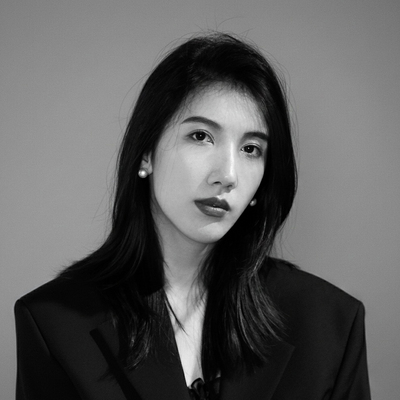 Aiqi Zhang
Senior Designer · Mother LA
Aiqi Zhang
Senior Designer · Mother LA
When you're reviewing work, what makes a piece truly stand out?
A strong point of view. The work does not necessarily need to be the loudest piece in the room, but I appreciate being able to understand why it took this particular form. The strongest projects usually feel considered at every scale, from the central concept to the smallest detail.
What part of submitting an entry do you think most people overlook?
The way the project is edited and presented. Image selection, sequencing, pacing, and written context all influence how the work is understood. Sometimes one precise process image or a small detail can communicate more than several polished mockups. I appreciate entries that guide the viewer clearly through the thinking while still allowing the work to speak for itself.
What is one thing you are tired of seeing?
I sometimes see projects where a familiar visual language arrives before the idea has had enough time to develop. Trends can be useful and enjoyable to explore, but I am always curious to see how they are interpreted through the particular subject, audience, or experience of the designer. Even a subtle personal decision can give the work a much stronger sense of purpose.
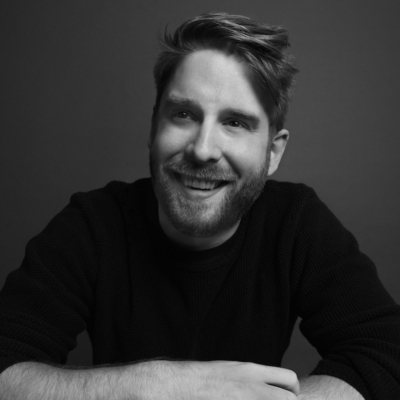 Jean-Philippe Dugal
Creative Director Art · No Fixed Address
Jean-Philippe Dugal
Creative Director Art · No Fixed Address
What part of submitting an entry do you think most people overlook?
To make one image that sums it all up. Then, all the other material should provide details.
What is one thing you wish more young creatives were doing?
Doing things for real. Don't use AI. It's important to feel the craftsmanship.
What else do students and young creatives need to know about winning awards?
Craft, craft, craft—and don't wait for any form of approval.
Erica Watts Awards Director · Mischief Awards & Creative Excellence
When you're submitting work, what do you do to make it stand out?
Give judges a reason to remember your work—a clear idea, unexpected insight or impressive results.
What part of submitting an entry do you think most people overlook?
Context! Either cultural or background on the client.
Any thoughts on the art of formulating a case study?
Remember that juries see hundreds of these cases and are chosen to be on the jury because they've seen and been a part of great work—so make it stand out, but short and sweet is always best.
When do you know an entry is ready to submit?
When you can show someone who doesn't work on the brand the entry and they have no follow-up questions.
What's something you wish you could tell young creatives entering the field?
Awards are more than just trophies. They're a way to self-promote, a way to benchmark great work in the industry, and juries are also a great way to scout mentors.
What else do students and young creatives need to know about winning awards?
Juniors have won Grand Prix. Don't be intimidated or think you have to be a senior creative to be eligible to win. A good idea doesn't care who came up with it.